Eco movies: the best environmental documentaries and festival picks
A Greek magazine about films that look at the sea, the forest and the city with open eyes. This English section covers the essentials: what to watch first, and the story of a festival that started on a turtle island.
Eco movies: where to start
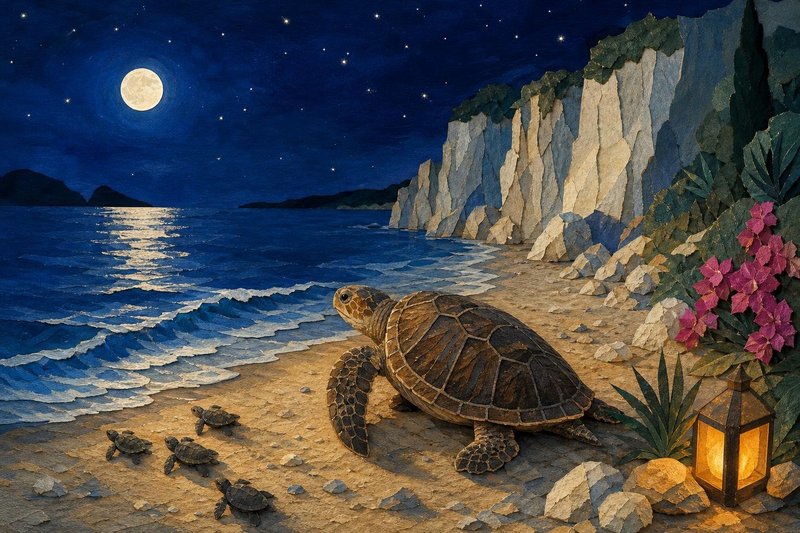
The best eco movies share one thing: an eco movie is a film in which nature is a character rather than a backdrop. It can be a documentary about loggerhead turtles nesting on a Greek beach, an animated fable about a forest spirit, or a courtroom drama about a poisoned river. What these films share is the question they leave behind: what is our relationship with the place around us, and what are we doing to it?
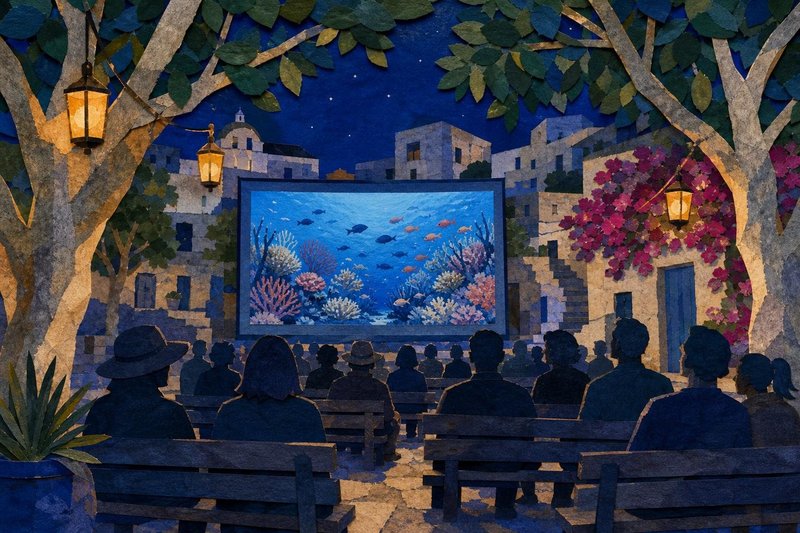
The English term ecocinema entered film criticism in the early 2000s; the critic Scott MacDonald used it in 2004 for films that train the eye to stay on a landscape long enough to really see it. For a viewer, wherever they watch and whatever they know about film theory, the test is simpler. If a film makes you look at the sea differently the next time you swim, it belongs here.
The best environmental documentaries, in three evenings
The best environmental documentaries are not always the newest. Start with the classics that invented the language: Nanook of the North (1922), The Silent World (1956), which won both the Palme d’Or and an Oscar, and the wordless Koyaanisqatsi (1982). Then move to the films that made the environment a political subject: Darwin’s Nightmare (2004), An Inconvenient Truth (2006), Chasing Ice (2012). Among eco movies made for the cinema rather than television, close with the newer, more personal ones, Honeyland (2019) and My Octopus Teacher (2020), which trade the big statement for one relationship followed over months: a beekeeper and her hives, a diver and one octopus. The full list, with notes for classrooms, is on the environmental documentaries page.
Nature films for every age
Animation carries some of the boldest environmental stories. Hayao Miyazaki built whole worlds around nature in Nausicaä of the Valley of the Wind (1984), My Neighbor Totoro (1988) and Princess Mononoke (1997). WALL·E (2008) opens with forty almost silent minutes on an abandoned, rubbish-covered Earth, and the Latvian Flow (2024) tells a flood story without a single line of dialogue. For adults, Tarkovsky’s Stalker (1979) and Paul Schrader’s First Reformed (2017) are darker and stay with you longer.
An environmental film festival on a Greek island
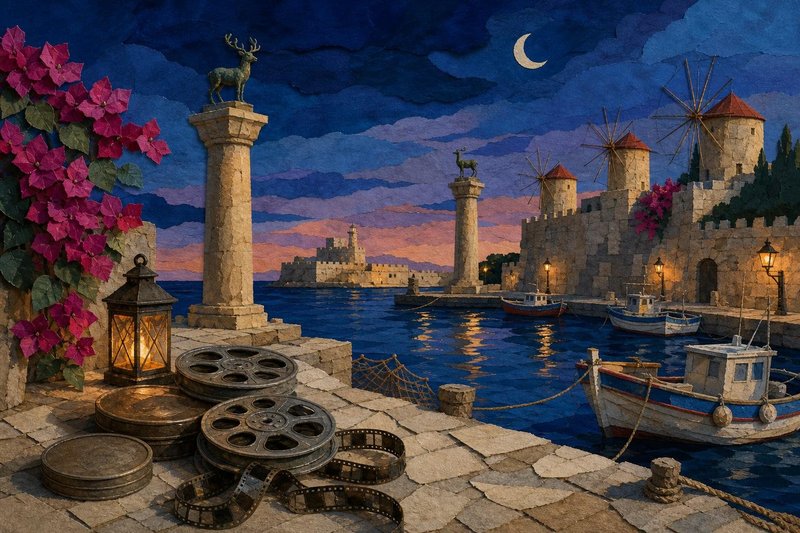
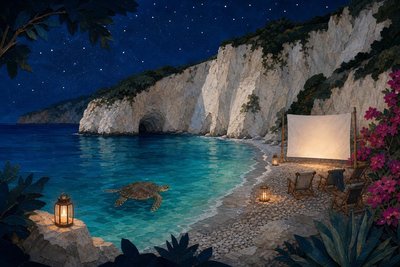
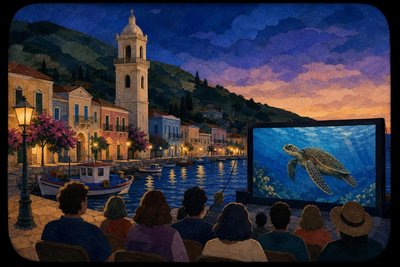
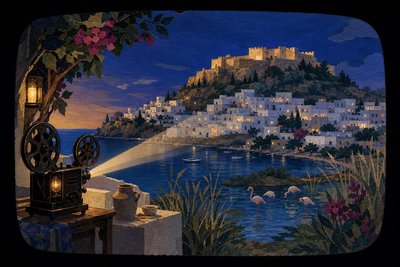
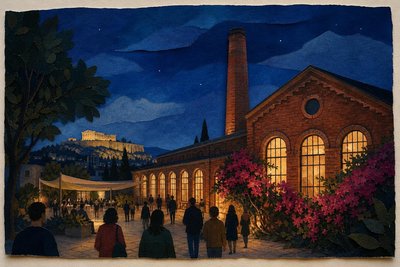
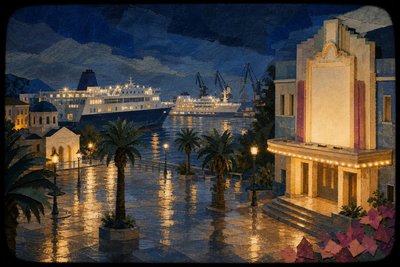
An environmental film festival in Greece ran for most of the 2000s. In September 2001 a small festival opened on Zakynthos, the island of Greece’s first National Marine Park, with twenty films from twelve countries. Ecocinema went on to hold seven editions: two on Zakynthos, two on Rhodes, two in Athens and a final one in Piraeus in February 2008. Its juries brought in people from CinemAmbiente in Turin, IDFA in Amsterdam and the BBC, and its prizes went to films such as The Corporation, Our Daily Bread and Manufactured Landscapes. The Ecocinema festival page goes through every edition of this environmental film festival in Greece, and the environmental documentaries it rewarded are on the list too.
Frequently asked questions
What counts as an eco movie?
Any film, documentary or fiction, where the natural world drives the story instead of decorating it: a reef, a forest, a river, a town living with pollution. Film scholars have called this ecocinema since the early 2000s.
What is a good first environmental documentary?
Chasing Ice (2012) for adults: short, visual and hard to forget. Microcosmos (1996) for children, since it hardly needs a word of dialogue.
Is there an environmental film festival in Greece?
Ecocinema, an international environmental film festival, ran seven editions between 2001 and 2008 on Zakynthos, on Rhodes, in Athens and in Piraeus. Today the Thessaloniki Documentary Festival and the Evia Film Project regularly screen films about nature and climate.
Which Greek islands hosted Ecocinema?
Zakynthos in 2001 and 2002, then Rhodes in 2003 and 2004. The festival moved to Athens and Piraeus after that, and in July 2009 a short programme of its films was screened on Hydra.
Το ελληνικό πρόγραμμα
The Greek edition goes deeper.